On May 1, 1994, in the San Marino Grand Prix, Senna again placed the car on pole for the 65th and final time, but he was particularly upset by two events. On Friday, during the afternoon qualifying session, Senna's protégé, then F1 newcomer Rubens Barrichello was involved in a serious accident that prevented him from competing in the race. The next day Austrian driver Roland Ratzenberger was killed in qualifying.

Formula 1 Driver Number 19 As the most senior driver, he offered to take the role of leader in this effort. Senna and the other drivers all opted to start the Grand Prix, but the race was interrupted by a huge accident at the start line. A safety car was deployed and the drivers followed it for several laps.

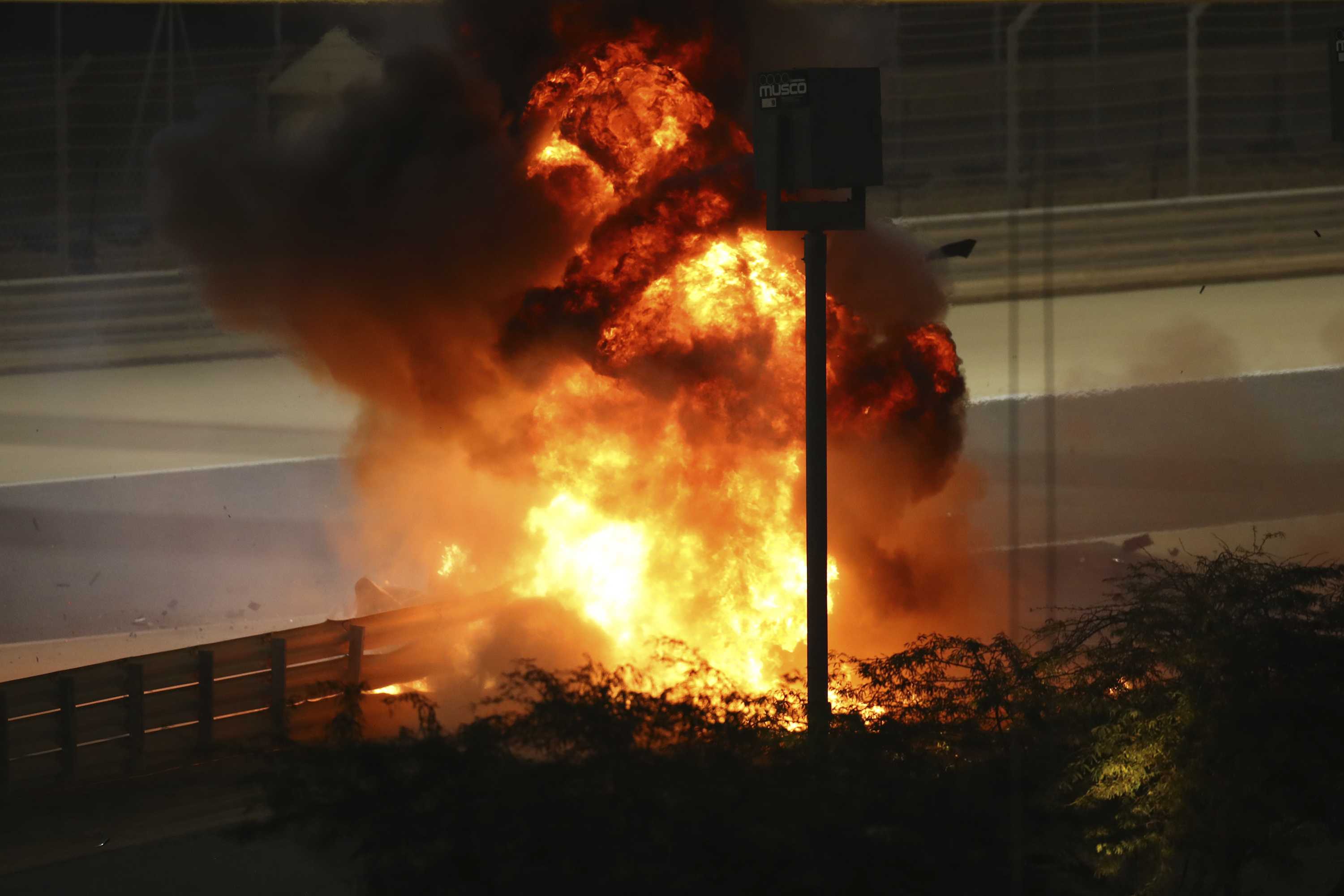
On the restart Senna immediately set a quick pace with the third quickest lap of the race, followed by Michael Schumacher. As Senna entered the high-speed Tamburello corner on the next lap, the car left the track at high speed, hitting the concrete retaining wall at around 217 km/h. The session was stopped while doctors attended to Ratzenberger. After initially being taken by ambulance to the on-circuit medical centre, he was airlifted to Maggiore Hospital shortly after, the second driver to be admitted there during the weekend. The session was restarted approximately 50 minutes later, but several teams—including Williams and Benetton—took no further part. Later in hospital, it was announced that Ratzenberger had died as a result of his multiple injuries.

His death marked the first Formula One race weekend fatality since the 1982 Canadian Grand Prix when Riccardo Paletti was killed. It had been eight years since Elio de Angelis died testing a Brabham car at the Circuit Paul Ricard. Travelling at 306 km/h at the Villeneuve corner, Roland's front wing failed, sending him into the concrete barrier wall almost head-on sustaining Basilar skull fracture. It was shown on live TV the aftermath with Ratzenberger sitting motionless. Medical crew arrived almost immediately, peformed CPR on the Austrian , but it was too late. On arrival at Maggiore Hospital, the 33 year old driver was pronounced dead.

He became the first fatality during a F1 race weekend, since the death of Ricardo Paletti in the 1982 Canadian Grand Prix, and the first death in a F1 car since Elio de Angelis during testing at Paul Ricard in 1986. Ayrton Senna immediately visited the accident scene and medical centre. There he was met by Professor Sid Watkins, who suggested to a tearful Senna that he should retire from racing and go fishing,to which Senna replied that he could not stop racing . The Simtek were planning to not race out of respect, however Bernie Ecclestone persuaded the Simtek team to take part in the race the following day to overcome the shock.
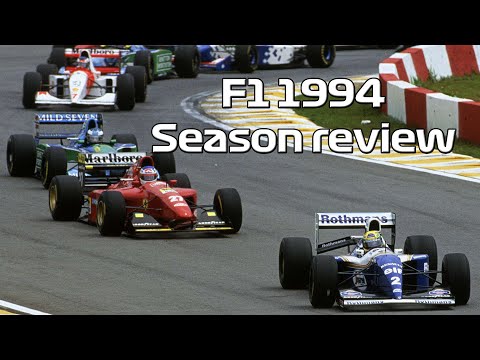
The season had begun with two great races for Michael Schumacher, who was leading the championship by 13 points for Benetton. So far in 1994, Senna had failed to score a single point for his Williams team. On the other hand, rising star Michael Schumacher had taken two wins from two rounds so far in the season. Senna had spun out of his home race in Brazil on Lap 55 whilst chasing Schumacher and was then taken out at the first corner of the Pacific Grand Prix after being hit by Mika Hakkinen and Nicola Larini. The 1994 Season also saw two new teams on the grid- Pacific Ilmor joined with two experienced drivers and Simtek-Ford, who had just 35 employees, paired David Brabham with exciting new Austrian talent Roland Ratzenberger. The 1994 Imola layout, which had been in place since 1981, was never again used for a Formula One race.

The circuit was heavily modified following the race, including a change at Tamburello—also the scene of major accidents for Gerhard Berger and Nelson Piquet —from a high speed corner to a much slower chicane. The FIA also changed the regulations governing Formula One car design, to the extent that the 1995 regulations required all teams to create completely new designs, as their 1994 cars could not be adapted to them. The concern raised at the drivers briefing the morning of the race, by Senna and Berger, would lead to the Grand Prix Drivers' Association reforming at the following race, the 1994 Monaco Grand Prix. The GPDA, which was founded in 1961, had previously disbanded in 1982. The primary purpose of it reforming was to allow drivers to discuss safety issues with a view to improve standards following the incidents at Imola. Additionally, a minute of silence was observed before the race.
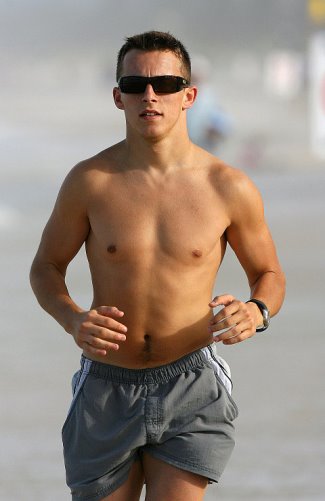
Ratzenberger was 33 years old when was killed during qualifying for the San Marino Grand Prix at the Imola circuit on Saturday 30 April 1994. He went off-track on the previous lap, damaging his front wing, but rather than come into the pits he continued since he was competing for the final grid spot. Subsequently, the high speed on the backstraight, and therefore high downforce pressure on the front wing, finally broke the wing off, sending it under Ratzenberger's car. He lost the steering capabilities and his car failed to turn into the Villeneuve Corner and struck the outside wall at 314.9 km/h.

After the car carried on down the track, spinning around and stopping at the next corner, Ratzenberger's lolling head was revealed. Senna tried immediately to pull away from Schumacher, whilst Berger in 3rd was already 2.586 seconds behind and Hill in 4th was 5.535 seconds behind. At the start of the 7th lap, Senna lost control, for reasons that are still the subject of controversy, and his car went straight on at Tamburello into an unprotected concrete wall. Telemetry shows he left the track at 310 km/h and was able to slow the car down by braking to 218 km/h in slightly under 2 seconds before hitting the wall.

The suspension of the Williams broke on impact, the right front tyre flying backwards and hitting Senna on the head. The car slid to a halt on the circuit, with Senna motionless. From the helicopter pictures, a slight movement of Senna's head gave a hint of hope.

Doctor Sid Watkins was on the scene in less than two minutes. Senna was airlifted to hospital but nothing could be done and Senna was pronounced dead later that evening. After the race, a moving detail was revealed when an Austrian flag was found in the Brazilian's cockpit because it is thought Senna had planned to pay tribute to Ratzenberger after the race. 1994 was one of the most tragic and controversial seasons in the sport's history. The FIA subsequently made sweeping changes to the rules and regulations of F1 in an effort to improve safety. There, Schumacher and Hill controversially collided while disputing the lead, handing the Drivers' Championship to Schumacher.

1992 World Champion Nigel Mansell, returning to F1 after two seasons in CART, won the race to secure the Constructors' Championship for Williams. It was just so on the Friday of San Marino Grand Prix weekend when sophomore driver Rubens Barrichello launched his Jordan Grand Prix car off a curb and flew airborne, horrifyingly, into a tire barrier. He was OK, somehow, but the next day Austrian rookie Roland Ratzenberger died instantly when his Simtek-Ford suffered a front-wing failure, pitching him hard into a concrete wall during qualifying. Three-time world champion Ayrton Senna, who had never before been present at a race where someone died, was distraught.

He had been able to brake so that the impact speed with the concrete wall was 130mph. Intrusive camera shots showed Senna not moving, remaining motionless in his car. A minute passed before Professor Sid Watkins arrived at the scene. Momentarily the main story was Senna failing to score for the third time in the season. Instead, only Senna's level of fitness made his death non-instant. Berger made a pit stop at the end of lap 15 for his first of two scheduled stops, before retiring a lap later with handling problems.

Häkkinen led his first ever laps of a Formula One World Championship race, before he made a pit stop at the conclusion of lap 18. Following the first series of pit stops, Schumacher resumed the race lead on aggregate, overtaking Nicola Larini on track at Tosa. Schumacher's extra pace as a result of his lighter fuel loads meant he was able to pull out enough of a gap to Häkkinen which enabled him to make an extra pit stop. Häkkinen's pace was very slow, allowing Larini to leapfrog him when drivers who planned to make two pit stops made their final pit stops. But the way in which the Imola weekend was beamed into millions of homes worldwide meant that people saw first hand the impact that driver deaths had on the sport. Safety had to be improved and the rule makers wasted no time in making their show safer.
Ratzenberger's lasting legacy is the HANS device, which prevents the type of injuries that Roland suffered. The device was introduced in 2001 and was made mandatory in 2003. It has saved countless lives, not just in Formula One but across the whole of motorsport.

More immediately, the design of helmets was improved- the visors were made thicker and the helmets were made stronger. These improvements almost definitely saved the life of Felipe Massa in his 2009 accident. After the Imola weekend's accidents with wheels, the safety of the tyres was also improved. Since 1999, the wheels of Formula One cars have been attached to the chassis with tethers, meaning they don't fall off the car on impact. Alboreto's incident in the pits also meant that it became mandatory for pit crews to wear helmets at all times in the pit lane.

It also made a rule be enforced for no pit crew members to be out in the pit lane unless the car they were working on was coming in to pit. The incident between Lehto and Lamy caused the safety car to be deployed driven by Max Angelelli, with all the remaining competitors holding position behind it while travelling at a reduced speed. During this period, as a result of travelling at slower speeds, tyre temperatures dropped.

At the drivers' briefing before the race, Senna, along with Gerhard Berger, had expressed concern that the safety car did not go fast enough to keep tyre temperatures high. Senna was also worried by a procedure introduced at the 1994 Pacific Grand Prix, whereby the safety car would lead the grid on the formation lap, rather than letting the race leader dictate the pace of the formation lap. It was later learned the car's brakes had been overwhelmed and started fading on the first lap, and thus the driver had to reduce his speed to avoid the possibility of the safety car itself causing an accident.

During the safety car drive through, Érik Comas and Éric Bernard made contact such that Comas' car experienced a vibration. Comas made a pit stop to have the problem evaluated by his Larrousse pit crew. Although the survival cell remained largely intact, the force of the impact inflicted a basal skull fracture.

Ratzenberger, in his first season as a Formula One driver, had run over a kerb at the Acque Minerali chicane on his previous lap, the impact of which is believed to have damaged his front wing. Rather than return to the pit lane, he continued on another fast lap. Traveling at 314 km/h , his car suffered a front wing failure leaving him unable to control it. Within seconds of the lights going out, yellow flags frantically waved. JJ Lehto in 5th place on the grid had stalled and failed to get moving away from the line.

The cars streamed past his stationary Benetton and each car that passed was approaching at a higher speed. It was inevitable that one car would fail to see the stricken car. His Lotus smashed almost head on to the back of Lehto's Benetton. Debris, including a wheel, flew into the crowd and nine spectators suffered minor injuries.
He had recently returned following an accident in testing at Silverstone which had cracked vertebrae in his neck. Whilst enjoying his three-year comeback with MERCEDES AMG PETRONAS, Michael was to reach the magic total of 300 Formula 1 races in, of all places, what he refers to as his 'living room' at the Grand Prix of Belgium 2012. Michael proved that he had not lost any of his speed during his break from Formula 1 with a fastest time in qualifying at Monaco in 2012, to mention but one of his achievements. His best race result in the Silver Arrow, though, was a third place at the European Grand Prix in Valencia in 2012.

Michael finally ended his Formula 1 career at the Brazil season finale in 2012 after 308 Grands Prix, 91 wins and seven world championship titles. He began go-karting at aged 14, when he discovered the sport during a family holiday. His F1 career started at McLaren in 1980 with a disappointing campaign, but it kicked into life when he signed for Renault. He took his first few wins in 1981, and finished 4th in the drivers' championship in 1982.

But his career took a huge step in 1983, when he pushed Brabham's Nelson Piquet all the way and finished within two points of the title win. And that's exactly what he did in 1975, with his first world championship. With an incredible Ferrari 312, he took the title with an impressive five wins. Lauda had another incredible start to the season with six wins and nine podiums in 10 races. But during the German Grand Prix, Lauda suffered life-threatening injuries that looked almost certain to end his life, let alone his racing career. One race later and Ferrari suffered a second blow when Collins, who was lying third in the drivers' championship, lost control while battling for the lead and his car careered into fencing.
Collins was thrown out of the cockpit and hit a lone tree, dying later that day from a fractured skull. Towards the end of the race, Häkkinen's pace was so slow that Karl Wendlinger was catching him in the Sauber, aiming to give Sauber their first podium finish. However, Häkkinen was able to resist Wendlinger's challenge and finish in third place, with Wendlinger fourth.

Ukyo Katayama finished fifth for Tyrrell and Hill was able to battle back to finish sixth, the last of the points-scorers. Michael Schumacher won the race ahead of Larini and Häkkinen, giving him a maximum 30 points after 3 rounds of the 1994 Formula One season. It was the only podium finish of Larini's career, and the first of just two occasions when he scored world championship points. Karl Wendlinger rode back to the pits on Häkkinen's McLaren after Wendlinger's car broke down on the slowing-down lap.

At the podium ceremony, out of respect for Roland Ratzenberger, who had died the day before, no champagne was sprayed. When it restarted, Berger took the lead on track but Schumacher was still leading in the aggregate standings, with Berger, Häkkinen, Larini, Wendlinger and Katayama following. On the 12th Lap in total, Schumacher did take the lead on the circuit from Berger, but pitted immediately afterwards. When Berger stopped on lap 15, Häkkinen took the lead for McLaren. Berger retired on lap 17 with a suspension failure, whilst Häkkinen pitted a bit later, rejoining fourth.

On Lap 21, Schumacher led on aggregate ahead of the Italian with Fittipaldi in third, Häkkinen, Frentzen and Wendlinger making up the top six. Fittipaldi did not finish the race; he retired with brake problems on lap 55. Damon Hill gained fifth, but lost it again to Katayama with two laps to go, and only kept a one-second lead over Heinz-Harald Frentzen to score the last point in the San Marino Grand Prix.

Fatalities and injuries at this race proved to be a major turning point in both the 1994 season, and in the development of Formula One itself, particularly with regard to safety. The race weekend was marked by the deaths of Austrian driver Roland Ratzenberger and of three-time world champion Ayrton Senna in separate accidents. Other incidents saw driver Rubens Barrichello injured and several mechanics and spectators injured. It was the first fatality in 12 years in the Formula One World Championship, since the 1982 Canadian Grand Prix, and the first with two driver deaths since the 1960 Belgian Grand Prix. The final race in Adelaide saw Schumacher taking the race lead.

However, on lap 35, Schumacher went wide and brushed the wall. Hill was suddenly right behind him took the inside line into the next corner. As Hill's Williams drew alongside the Benetton, Schumacher appeared to turn in aggressively and there was contact between the two rival cars. Hill's car initially appeared to be undamaged but his left tire rod was broken. The British driver went into the pits and tried to get it repaired, but he had to retire.


No comments:
Post a Comment
Note: Only a member of this blog may post a comment.